The Ultimate Day Hike Packing List: 10 Essentials + What to Leave Home
The short version: for a day hike, pack the ten essentials — water, food, extra layers, rain jacket, navigation, sun protection, first-aid kit, headlamp, a knife or multitool, and fire/emergency basics — in a small 15–25L daypack, plus a charged phone. Below is the complete checklist so nothing gets left on the kitchen counter.
Packing for a hike shouldn't be stressful, and it doesn't have to be. Once you know the core list, it becomes second nature — you'll be out the door in five minutes with exactly what you need and nothing you don't.
I'm Michele, founder of Roam Freely Outdoors. I've packed for a lot of trails (and helped a lot of women pack for their first), so I've boiled it down to a list that covers you without weighing you down.
What are the "ten essentials"?
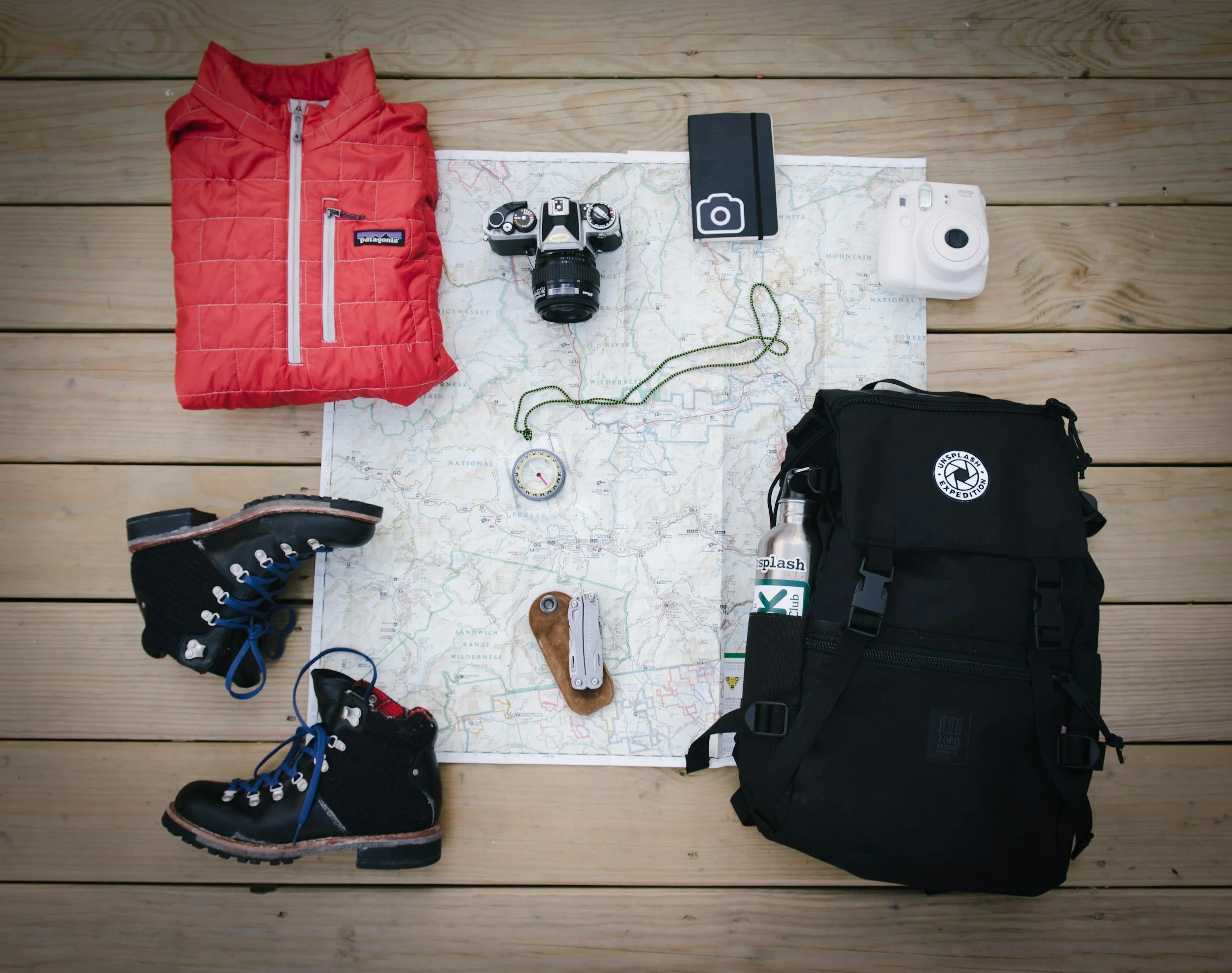
The ten essentials are the classic safety-first framework experienced hikers use — the small items that turn an unexpected problem into a minor inconvenience. You won't use all of them every hike, but carrying them means you're ready when something doesn't go to plan:
Navigation — your phone with the trail downloaded offline (this saves your battery), and ideally a paper map.
Sun protection — sunscreen, SPF lip balm, sunglasses, and a hat.
Insulation — an extra warm layer beyond what you're wearing (always think layers over one heavy item).
Illumination — a headlamp or flashlight (plus spare batteries).
First-aid kit — including blister care.
Fire — a lighter or waterproof matches (emergency warmth).
Repair kit / tools — a small knife or multitool.
Nutrition — extra food beyond your planned snacks.
Hydration — extra water, or a way to treat more.
Emergency shelter — a lightweight emergency bivvy or space blanket.
For short, popular, front-country trails you can go lighter; the farther and more remote you go, the more these earn their place.
The complete day-hike packing list
Here's everything, organized so you can check it off. For a typical day hike, a 15–25L daypack holds it all comfortably.
The essentials
Water (about half a liter per hour; more in heat) or a hydration reservoir
Snacks + a packed lunch
Extra warm layer (fleece or puffy)
Packable rain jacket
Navigation: phone with offline trail map + power bank; paper map optional for short day trip, highly reccomended on a 10+hour day
Sun protection: sunscreen, SPF lip balm, sunglasses, brimmed hat
Small first-aid kit with blister bandages / moleskin
Headlamp or flashlight
Lighter or waterproof matches
Small knife or multitool
Emergency bivvy or space blanket (for longer/remote hikes)
Wear & carry
Moisture-wicking layers (no cotton)
Hiking pants or leggings
Wool or synthetic hiking socks
Broken-in trail runners or hiking boots (If it’s the first time wearing your shoes or boots just do a small 1 or 2 mile hike to see how they feel!)
Watch (to track your turnaround time)
Good to have
Trekking poles (great for descents and knees)
Bug spray
Hand sanitizer + a small trowel and TP (for backcountry bathroom breaks)
A trash bag (pack out everything)
Camera
Cash and ID
How much water and food should I pack?
A reliable rule of thumb is about half a liter (16–20 oz) of water per hour of hiking — more in heat, at altitude, or on strenuous climbs. For a typical 2–3 hour outing, 1–2 liters covers most people; carry extra if it's hot or water sources are uncertain. Years ago I learned the hard way on this one too! In Yosemite, my group and I were hiking Half Dome. There was record snow that winter and so the melt was very intense in June. The trail we wanted to take back had to be closed for safety. This turned our hike into a much longer hike and the weather ended up being hotter than anticipated and you guessed it we ran out of water even though we were all carrying more than we needed for the day! My lesson is I never hike without my water filtration system now! When you are going for a hike you have to consider the what ifs! It makes everything go much smoother.
For food, pack more than you think you'll want. Hiking burns energy quietly, and a hungry hiker is a grumpy, tired one. Salty, snackable, energy-dense options travel best: trail mix, nut butter, jerky, fruit, energy bars, and a proper sandwich for lunch. I always stop on my way and grab a wrap or a sub and then I can grab some condiment packets since I won’t be carrying a cooler! Chocolate is your friend on the trail! Another reason to love hiking! You need calories and protein to get you through and in an emergency you want to make sure you have plenty of extra!
What extras should women pack?
A few items women often want on the list, beyond the standard essentials:
Sun and skin: a mineral sunscreen for the face, SPF lip balm, and a hat you can count on. I learned this one the hard way in Peru, not all lip sunscreen is the same! I absolutely fried my lips on a 7 Day trek in Peru and it was miserable! Aquaphor sunscreen worked the best for me! I had no issues with sunburn on my lips when doing Kilimanjaro!
Bathroom kit: travel tissues or a pee cloth, hand sanitizer, and a small zip bag or doggie poo bag to pack out used TP (leave no trace).
Period supplies: whatever you use, plus a zip bag to pack out — worth having along even if you're not expecting it.
Chafe prevention: an anti-chafe balm is a small thing that saves a hike.
Hair tie and a light buff for sun, wind, or a quick warm layer.
None of it takes much room, and any of it can quietly make the difference between a great day and an uncomfortable one.
What should I NOT pack?
Just as useful as knowing what to bring: leave out the stuff that weighs you down without earning it. If it’s a shorter day hike this doesn’t become such an issue, however on the longer day hikes that pack can start to feel very heavy after mile 8. A lighter pack is a happier hike — bring what covers your essentials and resist the rest. Anything that is not an essential item can just end up weighing you down and make the trip a slog rather than the refresh you were hoping to get!
Do I need all this on a guided trip?
Happily, no. On our trips, we supply all the hiking and camping gear, and once you book we send a complete, destination-specific packing list tailored to that trip and season — so you'll know exactly what to bring and can leave the guesswork (and the extra stuff) at home. You're really just packing your clothes and personal items.
Save this checklist (or screenshot it), tuck it by your gear, and you'll never have that "did I forget something?" feeling at the trailhead again.
Frequently asked questions
What should I pack for a day hike? The ten essentials — water, food, extra layers, rain jacket, navigation, sun protection, first-aid, headlamp, a knife/multitool, and fire/shelter basics — plus a charged phone, in a 15–25L daypack. Add women-specific extras like a bathroom kit and anti-chafe balm.
What are the ten essentials for hiking? Navigation, sun protection, insulation (extra layer), illumination (headlamp), first-aid, fire, a repair kit/tools, extra food, extra water, and emergency shelter. They're the safety items that handle the unexpected.
How much water should I bring on a day hike? About half a liter per hour of hiking — roughly 1–2 liters for a typical day hike — and more in heat, at altitude, or on strenuous trails.
What size backpack do I need for day hiking? A 15–25L daypack comfortably holds a day-hike load: water, snacks, layers, and the essentials. Larger isn't better for a day out — it just invites overpacking.
What should women not forget when hiking? Beyond the essentials: a bathroom kit (tissues, hand sanitizer, a pack-out bag), period supplies just in case, anti-chafe balm, sunscreen and lip balm, and a charged phone with a power bank.
Want your packing made even easier? When you book a Roam Freely trip, we send you a complete, season-specific packing list and supply all the hiking and camping gear — so all you have to bring is yourself.
Explore More