The quick answer: glamping — “glamorous camping” — is camping with the comfort built in. Instead of pitching your own tent and sleeping on the ground, you arrive to a spacious walk-in tent that’s already set up, with a proper bed, warm bedding, a lantern, and a rug underfoot, plus hot showers and flushing toilets nearby. You get the magic of sleeping out in nature without the aching back or the fuss. It’s the perfect middle ground for a hiking trip.
If the word “camping” gives you pause — visions of a thin pad on rocky ground, wrestling with tent poles in the dark, no bathroom in sight — glamping is the happy answer to every one of those worries. Let me explain exactly what it is and why it’s become the heart of how we travel.
I’m Michele, founder of Roam Freely Outdoors. “But do we have to camp?” is one of the questions I hear most — and glamping is my favorite answer, because it wins over even the most committed hotel-lovers.
What does “glamping” actually mean?
Glamping is a blend of “glamorous” and “camping,” and it means exactly what it sounds like: the experience of camping — sleeping out under the stars, waking up in nature — with the comforts and conveniences you’d never get roughing it. No sleeping on the ground, no gear to haul or pitch, no cold and fumbling setup. Someone else handles all of that, and you simply arrive to a cozy, ready-made basecamp.
It exists all over the world in many forms — safari tents in Africa, yurts, treehouses, airstreams. On a hiking trip, it means a comfortable, spacious tent set up and waiting for you at a beautiful campground, so you can spend your energy on the trail instead of the tent.
How is glamping different from regular camping?
The difference comes down to comfort and effort. Here’s the side-by-side:
| Traditional camping | Glamping | |
|---|---|---|
| Your bed | Thin pad on the ground | Raised cot or mattress + bedding |
| The tent | You bring and pitch it | Set up and waiting for you |
| Gear | Haul all your own | Provided and handled |
| Bathrooms | Whatever's around (or a hole) | Flushing toilets, hot showers nearby |
| Setup / teardown | Your job, every day | Done for you |
| Comfort level | Rugged | Cozy — most comforts of home |
| What you bring | Everything | Just clothes and personal items |
The scenery and the fresh air are identical. Everything that makes camping uncomfortable is what glamping removes.
What’s inside a glamping tent on a hiking trip?
On our trips, the setup is the same every time, so you always know exactly what you’re getting: a large, walk-in tent you can stand up in, outfitted with a raised cot (no sleeping on the ground), a comfortable sleeping mattress, a warm sleeping bag and pillow, a rug underfoot, and a shared nightstand with a lantern. Guests share a tent two per tent, and everyone always has her own bed. Nearby you’ll find flushing toilets and hot showers.
In other words: you’re not roughing it. Think of it as a cozy little room with canvas walls and the wilderness right outside the zipper.
Is glamping actually comfortable?
Yes — that’s the whole point, and it’s what surprises first-timers most. You’ve got a proper bed off the cold ground, warm bedding, a place to keep your things, and bathrooms and showers close by. Many women who were nervous about “camping” tell me by night two they’re sleeping better than they do at home — something about the fresh mountain air and a day of happy hiking.
Will you feel the temperature more than in a hotel? A little — that’s part of the charm. But with warm bedding (and extra blankets on hand for cold nights), you stay cozy. You get the romance of falling asleep to a quiet camp and waking up to birdsong, minus the discomfort.
Why is glamping perfect for a hiking trip?
Because it’s the ideal middle ground between roughing it and hiding indoors. On a hiking trip, glamping means:
You wake up right in the heart of the scenery — steps from the trail, not a long drive away in a distant hotel.
Your energy goes to hiking, not chores. No pitching tents, no cooking, no teardown — just show up and rest.
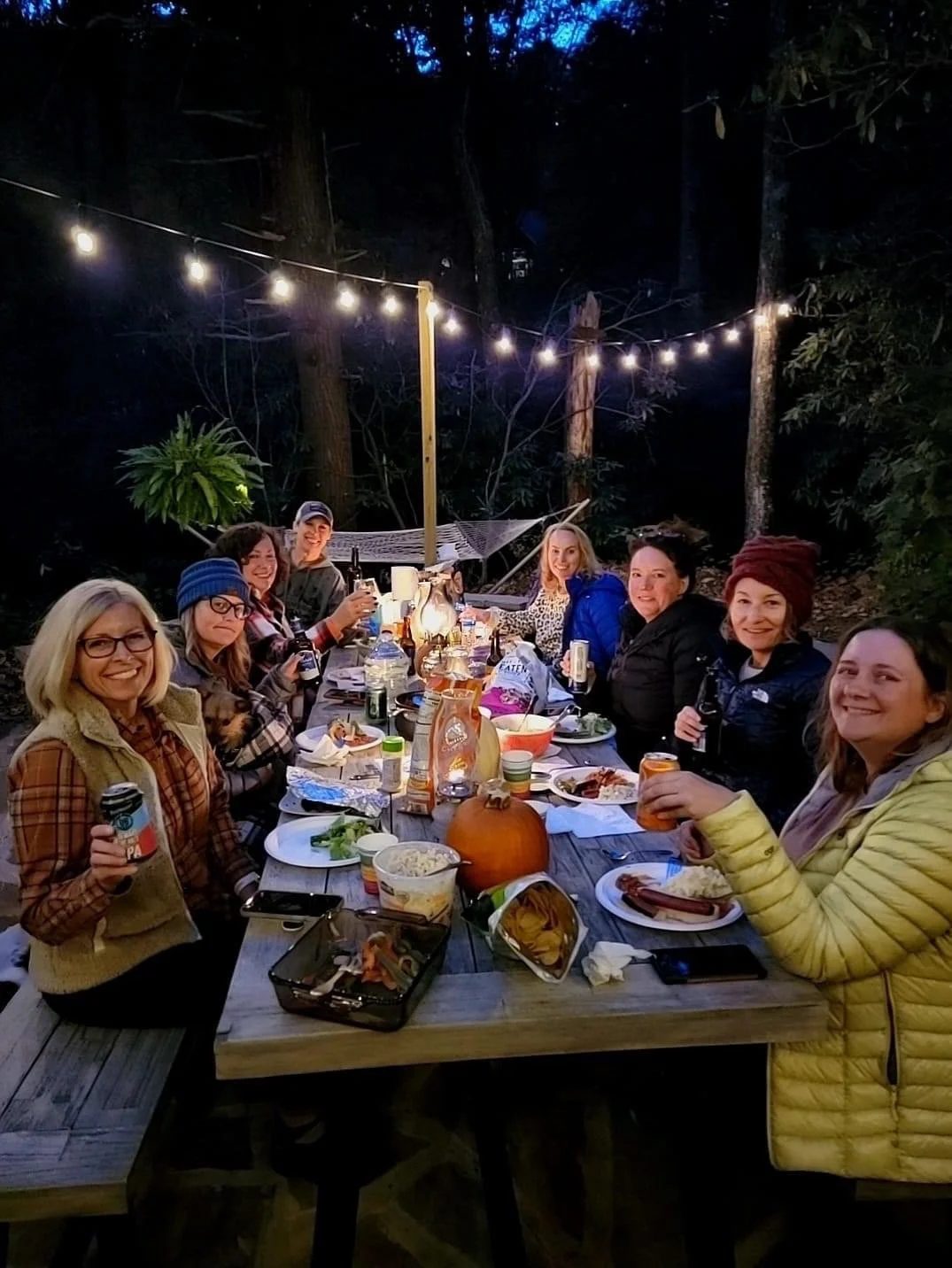
It’s social in the best way. Evenings around the campfire, under the stars, with your group — the part so many women say they loved most.
It’s comfortable enough to actually recover between big days, so you’re fresh for tomorrow’s trail.
It gives you the immersion and magic of camping with the restfulness you need to hike day after day.
Do any trips not involve glamping?
A few of our trips use a house or lodge instead — our Acadia trip, for example, settles into a beautiful house near the park. But for most destinations, glamping is how we do it, because it puts us right in the wild and keeps every trip comfortable and consistent. Whichever trip you choose, you’ll never be sleeping on the ground. (Not sure which setup a trip uses? It’s noted on every trip page.)
So if “camping” was the thing giving you second thoughts — let it go. Glamping is camping with all the good parts kept and the uncomfortable parts quietly removed. Come see for yourself.
Frequently asked questions
What is glamping?
Glamping — “glamorous camping” — is camping with comfort built in: a spacious tent set up for you with a proper bed and bedding, a lantern and rug, and hot showers and flushing toilets nearby. You get the nature experience without sleeping on the ground or handling any gear.
What’s the difference between glamping and camping?
In traditional camping you bring and pitch your own tent, sleep on a thin pad, and rough it for bathrooms. In glamping, the tent and a proper bed are set up and waiting, gear is provided, and toilets and showers are nearby. The scenery is the same; the discomfort isn’t.
Is glamping comfortable?
Yes. You sleep on a raised cot or mattress with warm bedding, off the cold ground, with bathrooms and showers close by. Many first-timers say they sleep better than at home.
Do I need to bring my own gear for glamping?
No — on a guided glamping trip, the tent, bed, and camping gear are all provided. You just bring your clothes and personal items.
Is glamping good for beginners or people who don’t like camping?
Absolutely. Glamping is designed for exactly those people — it removes the ground-sleeping, gear-hauling, and bathroom worries that put many people off camping, while keeping the beauty and the campfire magic.
Curious to try it? Roam Freely runs small, women-only hiking adventures where you glamp in comfort right in the heart of the national parks — a proper bed, hot showers, and the wild just outside your tent.
A good place to start: the Zion, Bryce & Escalante trip.
Explore More